logo
Home ProductsThermal Gap Filler

Highest Thermal Gap Filler Thermal Conductive Pad For Electronics Heat Transfer

Certification
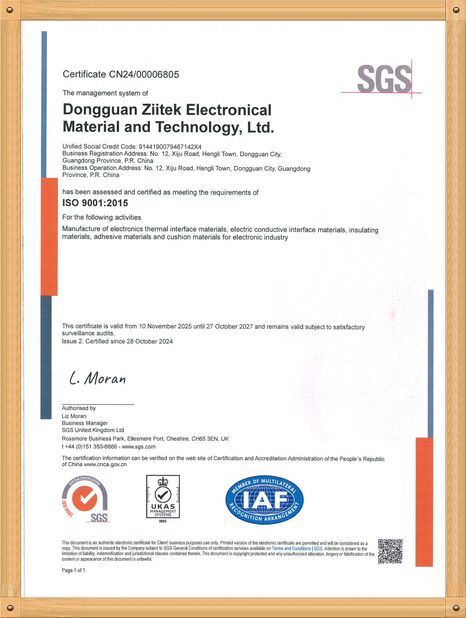
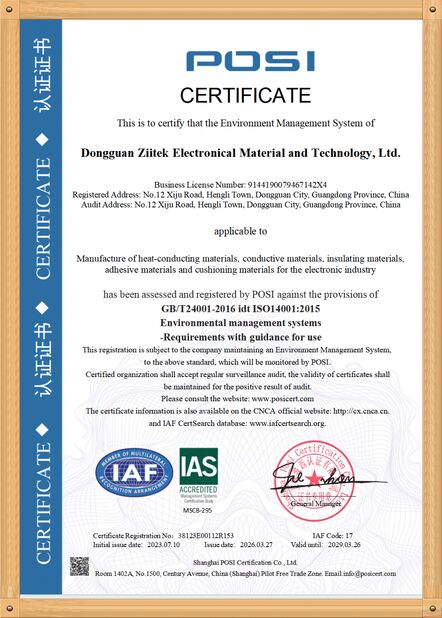
China Dongguan Ziitek Electronical Material and Technology Co., Ltd certification
Customer Reviews
The Thermal Conductive Pad is looking and working very good. We have no need for other Thermal Conductive Pad now!

—— Peter Goolsby

I had cooperated with Ziitek for 2 years, they provided high quality thermal conductive materials, and delivery in time, recommend their phase change materials

—— Antonello Sau

Good quality, Good service. Your team always give us help and resolving, hope we will be good partner all the time!

—— Chris Rogers

I'm Online Chat Now

Highest Thermal Gap Filler Thermal Conductive Pad For Electronics Heat Transfer

Highest Thermal Gap Filler Thermal Conductive Pad For Electronics Heat Transfer
Highest Thermal Gap Filler Thermal Conductive Pad For Electronics Heat Transfer Highest Thermal Gap Filler Thermal Conductive Pad For Electronics Heat Transfer Highest Thermal Gap Filler Thermal Conductive Pad For Electronics Heat Transfer Highest Thermal Gap Filler Thermal Conductive Pad For Electronics Heat Transfer

Large Image :  Highest Thermal Gap Filler Thermal Conductive Pad For Electronics Heat Transfer

Product Details:
Place of Origin: China
Brand Name: ZIITEK
Certification: UL and RoHs
Model Number: TIF860QE
Document: TIF800QE_Data Sheet.pdf
Payment & Shipping Terms:
Minimum Order Quantity: 1000pcs
Price: Negotiation
Packaging Details: 1000pcs/bag
Delivery Time: 3-7 work days
Payment Terms: T/T
Supply Ability: 10000/day

Highest Thermal Gap Filler Thermal Conductive Pad For Electronics Heat Transfer

Description
Products Name: Highest Thermal Gap Filler Thermal Conductive Pad For Electronics Heat Transfer Thermal Conductivity& Compostion: 13.0W/m-K
Density(g/cm³): 3.45 Dielectric Constant @1MHz: 7.0
Color: Gray Recommended Operating Temperature (℃): -40 To 200℃
Thickness: 1.5mmT Applications: Electronics
Usage: Electronics Heat Transfer Keywords: Thermal Conductive Pad
Highlight:

high temperature phase change materials

,

thermal conductivity silicone

,

Highest Thermal Gap Filler

Highest Thermal Gap Filler Thermal Conductive Pad For Electronics Heat Transfer
Product Overview
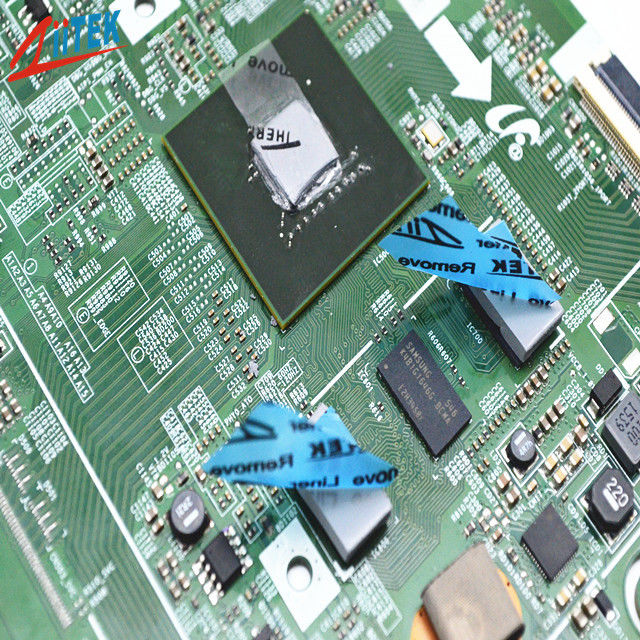
The TIF®800QE series of thermal interface materials is specifically designed to fill air gaps between heat-generating components and heat sinks or metal baseplates. It offers excellent compliance, allowing it to conform tightly to heat sources with varying shapes and height differences. Even in confined or irregular spaces, it maintains stable thermal conductivity, enabling efficient heat transfer from discrete components or the entire PCB to the metal housing or heat sink. This significantly improves the heat dissipation efficiency of electronic components, thereby enhancing operational stability and extending device lifespan.
Key Features
  • Good thermal conductivity: 13.0W/mK
  • Naturally tacky needing no further adhesive coating
  • High compliance adapts to various pressure application environments
  • Available in different thickness options
Applications
  • Heat dissipation structure for radiators
  • Telecommunication equipment
  • Automotive electronics
  • Battery packs for electric vehicles
  • LED drivers and lamps
  • Handheld portable electronics
  • Semiconductor automated test equipment (ATE)
  • CPU
  • Display card
  • Mainboard/mother board
Technical Specifications of TIF®️800QE Series
Property Value Test Method
Color Gray Visual
Construction Ceramic filled silicone elastomer ZKTM J024
Density (g/cm³) 3.45 ASTM D792
Thickness Range (inch/mm) 0.012~0.020 | 0.030~0.200
0.30~0.50 | 0.75~5.00
ASTM D374
Hardness (Shore 00) 40 | 35 ASTM 2240
Recommended Operating Temperature -40 to 200℃ ZKTM J025
Breakdown Strength (V/mm) ≥5500 ASTM D149
Dielectric Constant @1MHz 7.0 ASTM D150
Volume Resistivity (Ohm-meter) >1.0×10¹² ASTM D257
Flame rating V-0 UL 94 (E331100)
Thermal conductivity (W/m-K) 13.0 ASTM D5470
Product Dimensions
Standard Thickness: 0.012" (0.30 mm) ~ 0.200" (5.00mm)
Standard Size: 16" × 16" (406mm × 406mm)
The TIF® series is available in custom shapes and various forms. For other thicknesses or more information, please contact us.
TIF®800QE Thermal Conductive Pad product image
Manufacturer Profile
Ziitek company is a high-tech enterprise dedicated to the R&D, manufacture and sales of thermal interface materials (TIMs). We have rich experiences in this field which can support you with the latest, most effective and one-step thermal management solutions. We have many advanced production equipment, full test equipment and fully automatic coating production lines which can support the production of high performance thermal silicone pad, thermal graphite sheet/film, thermal double-sided tape, thermal insulation pad, thermal ceramic pad, phase change material, thermal grease etc. UL94 V-0, SGS and ROHS are compliant.
Certifications
ISO9001:2015, ISO14001:2004, IATF16949:2016, IECQ QC 080000:2017, UL
Frequently Asked Questions
Q: What is a Thermal Interface Material (TIM)?
A: TIM (Thermal Interface Material) refers to a class of materials used to fill microscopic air gaps between a heat source and a heat sink. TIMs help reduce interface thermal resistance and improve heat transfer from the heat source to the cooling structure. Common TIMs include thermal pads, thermal gels, thermal greases, phase change materials (PCMs), and liquid metal.
Q: What is Thermal Conductivity?
A: Thermal conductivity indicates a material's ability to conduct heat and is typically measured in W/m*K. Under the same testing conditions, a higher thermal conductivity generally indicates better heat-conduction capability.
Q: What is Thermal Resistance?
A: Thermal resistance indicates the resistance to heat flow through a material or interface and is typically expressed in K/W or °C/W. Lower thermal resistance generally means that heat can pass through the material more efficiently.
Q: What is the difference between Thermal Conductivity and Thermal Resistance?
A: Thermal conductivity primarily reflects the intrinsic heat-conduction capability of a material, while thermal resistance is also affected by factors such as thermal conductivity, material thickness, contact area, and interface conditions. In practical applications, it is important to consider not only thermal conductivity but also the overall thermal resistance of the TIM layer.

Overall Rating

5.0
Based on 50 reviews for this supplier

Rating Snapshot

The following is the distribution of all ratings
5 stars
100%
4 stars
0%
3 stars
0%
2 stars
0%
1 stars
0%

All Reviews

D
Dante
Poland Jul 20.2026
These worked so well, I came back for more. I have a mini pc with passive cooling. When it heats up, the case/heat sink separates slightly from the CPU causing the CPU temps to increase drastically. These thermal pads filled the gap giving me consistent CPU temperatures. I also used them for LAN and NVME drives.
Contact Details
Dongguan Ziitek Electronical Material and Technology Co., Ltd

Contact Person: Dana Dai

Tel: +86 18153789196

Send your inquiry directly to us (0 / 3000)